By Wendy Buendia
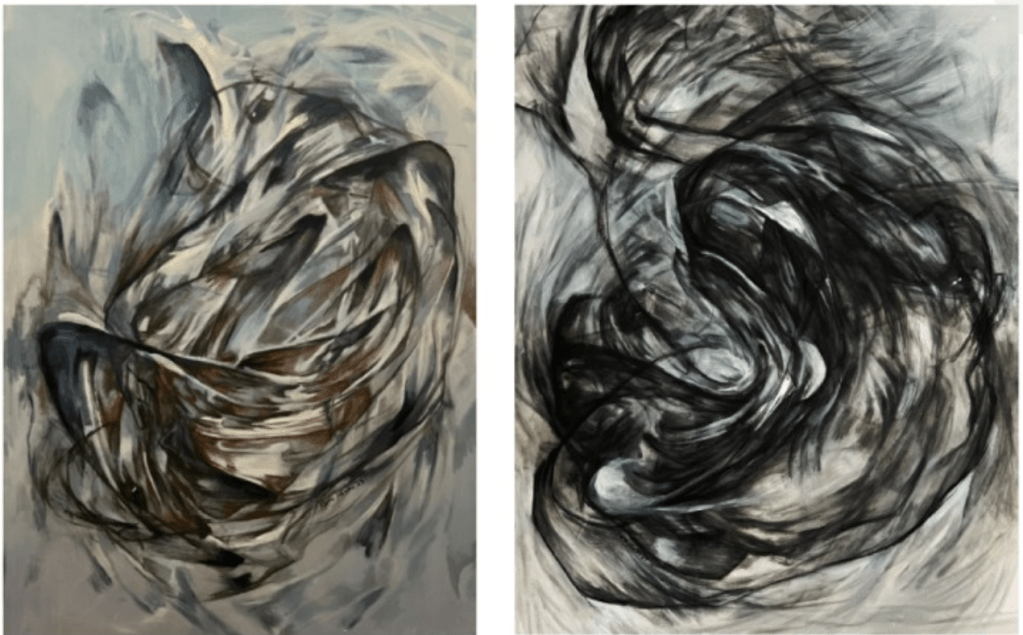
New beginnings do not mean wiping the slate clean or forgetting. Rather, they serve as a reminder to engage with and confront the present. Rama AlFarkh, a featured artist in this exhibition, dives into what makes new beginnings. Their work explores the confrontation and engagement of big emotions. To heal from the aftermath and move forward, Rama presents the idea that the accumulation of past and present conflicts manifests uncharted territories in ourselves. The accumulation of knowledge from our experiences should not diminish the severity and purity of the landscapes we navigate, no matter how many times we have trekked those terrains.
It’s like the expression, “I know it like the back of my hand.”
But who looks at the back of their hand that often? To have it memorized? Life is full of surprises, with some hiding right under our noses. The soft crunch of the soil beneath our feet, the whistle of wind tickling our ears, and the hands we greet with every new connection made, accompany us long after the moment has passed.
The theme ‘New Beginnings’ provides endless possibilities to interpret how history plays a role in transformation. The curator of the exhibition, Salomé Cosmique, and the Love for Immigrants founder, Maribel Rodriguez, dove into the how and why of choosing this theme. “The space where the exhibit will take place, the Martin Luther King Jr. Memorial Library is also a space of activism and history. This year we wanted to align the space with the theme [of ARTivism: New Beginnings], because from there comes a theme we have in common,” explained Maribel. Salomé added, “I feel “orgullosa” (proud) that we have this exhibit at the Martin Luther King Jr. Memorial Library, he was a great leader and activist who ties well with this particular theme.” With this library as the setting for the ‘New Beginnings’ exhibition, viewers can begin to immerse themselves in the untapped power of progress.
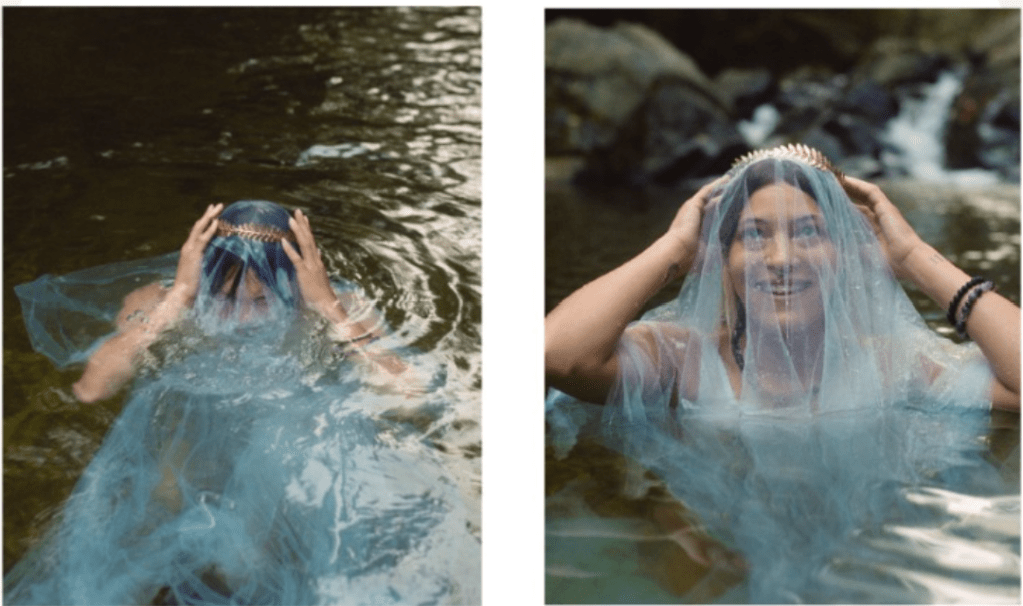
The artists and their work featured in this exhibition exemplify the diversity of thought and identity of the immigrant community. No matter where these works of art take us, they all serve as a reminder that “they tried to bury us, but they didn’t know we were seeds,” as poet Dinos Christianopoulos eloquently stated. “Still Here,” a piece by the artist AnaYelsi Velasco Sanchez, perfectly aligns with this passage. A scene of chaos and obstruction serves as the backdrop and a single flower blooms in the foreground. One featured artist, Wole Ajagbe, touches on the theme through their photographs. Their photographs Final Moments of Rebirth, utilize the metaphor of washing your body and mind to be reborn with new ways to think and feel. Maribel talked about art as paving towards a better future, “where our identities and cultures can be accepted, loved and above all, where [respect for] humanity is present in the future. We are artists, and we are curators,.. our way to continue that fight [is] to create, [which] is the opposite of destruction and our way to be alive in certain aspects. I think it is evident, but we chose works that inspire. The people would leave the exhibition feeling hopeful, which is important.” Salomé elaborated on the artist selection, “I chose these four artists who have been a part of the Love for Immigrants community. AnaYelsi is in a constant fight to advocate for immigrants. In her artistic works, she protests against how immigrants are depicted. We wanted to demonstrate a diverse image of immigrants, not just Latinos.” Many different mirrors can be held up, and in its reflection, an immigrant would be looking right back. However, there persists an outdated depiction of what an immigrant looks like. Salome concluded, “Sometimes an American does not feel like they could be an immigrant, but there are all types of Americans.”

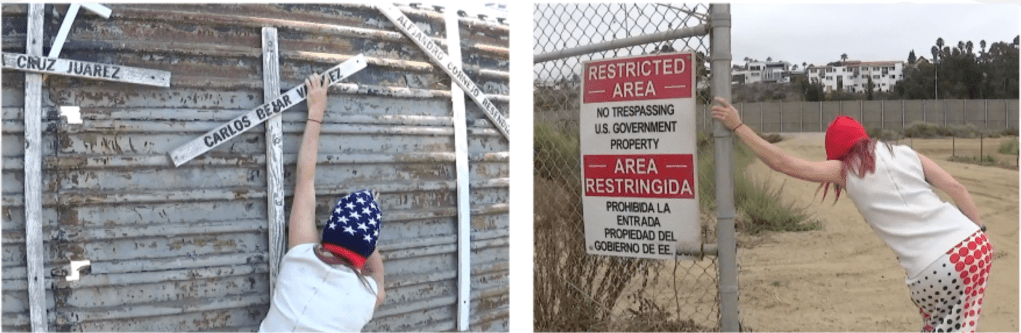
We will have an artist talk with, performance artist, Jessica Fairfax Hirst, on Wednesday, May 28th at 6pm for our closing event. You can learn more about the artist in our next blog article.
 Love4Immigrants